
Tomasz
Educator, AI institute leader, and co-founder
The way people find a local practice is changing. More of them now ask AI, whether that's ChatGPT or the answer at the top of Google, and act on the name it returns. This report documents how that shift is playing out for Cedar Ridge and the other dental practices in its market.
It runs in two parts: what AI tools say about Cedar Ridge today, and what the rest of dentistry is adopting. Every claim is the kind we check against live sites and listings, so each one is verifiable.
— Tom & Lu, Here Forward
Search is the front door to a practice, and it's moving to AI. This part covers how that shift works, what AI tools currently return for Cedar Ridge, and how the practices compare on the signals those tools read.
For twenty years, getting found meant ranking in Google's list of blue links. For a dental practice, most new patients still arrive the familiar way: the Google map pack, reviews, and word of mouth. What's changing is that a growing share of people now ask a question instead, to ChatGPT, to Google's AI answer at the top of the page, or to a phone assistant, and act on the one answer it gives. For a practice, that adds a new way to get found, or missed: whether an AI names it when someone asks who takes their insurance.
Sources: Pew Research (2025); BrightEdge via SQ Magazine (early 2026). Trackers vary, so the 48% is one firm's estimate. The direction is the point.
None of this needs an opinion about whether the shift is good, and it doesn't replace local search yet. It's a fast-growing layer on top, measurable and worth getting ahead of. The practical question for any practice: when a new patient asks an AI who to book, does its name come up?
An AI isn't magic, and it doesn't form opinions about anyone's clinical work. It answers a local question one of two ways: from what it absorbed during training, or by reading websites and listings on the spot and summarizing them. Either way, it can only repeat what's written somewhere it can read.
Cedar Ridge has the first part, clear text a person reads. It also has a starter version of the second: a basic Dentist schema block on the homepage with the name, address, and phone, which is more than most practices manage. What's missing is the structured data that answers the two questions a new patient actually asks before booking, do you take my insurance, and can I get in this week.
Structured data is a small, hidden block of code in a page. A person never sees it. Google and AI tools read it first, because it states facts as labeled data instead of a sentence they have to interpret. The same information, two formats:
"Family and general dentistry for every age, with a gentle team and most major PPO plans accepted, plus an in-house plan for patients without insurance."
The left is a sentence a machine has to interpret. The right is a fact sheet in the machine's own language, sitting in the page's code. Cedar Ridge publishes the name and address part of that fact sheet, but not the insurance, availability, or rating part, which is the part a new patient is searching for. The next sections show what that produces.
We asked the two leading AI tools, ChatGPT and Google's AI, the question a growing number of new patients now ask out loud: which dentists around here take Cigna and are taking new patients, and which two would you pick? Neither one named Cedar Ridge. That isn't a verdict on the practice. It's that the answer to both questions, the insurance and the availability, was never published in a form these tools can read.
"Brightside Dental Group… and Clearwater Dentistry."
Both publish online booking and a list of accepted PPOs a machine can read. Cedar Ridge didn't appear in the two-name answer.
"Brightside Dental Group confirms it's accepting new patients and lists Cigna."
Google leaned on the practice with a published, machine-readable insurance and new-patient answer. Cedar Ridge accepts Cigna too, but the site never says so in a form the tool could lift.
Why those names and not Cedar Ridge? It came down to things these tools can read, none of them the quality of the dentistry, which AI doesn't measure:
AI answers shift by date, location, account, and exact wording, so a re-run won't match these word for word; the pattern is what holds.
This looks at one thing: how readily an AI tool can pull Cedar Ridge's details from its site and trust them. Each line below is the kind we check against the live site, so each is verifiable.
The two items marked present, readable text and a basic schema block, are why this isn't a failing grade: a machine can already read who Cedar Ridge is. The three marked absent are the signals that turn a credible site into a booked appointment, and they're exactly the questions a new patient asks. The grade reflects that gap, not the quality of the care.
We read the live code of the most visible dental practices in the area and paired it with each one's Google rating and review count. The table records what we found.
| Practice | Google rating | Reviews | Structured data for AI | Online booking |
|---|---|---|---|---|
| Cedar Ridge | 4.9 | ~510 | Basic only | No |
| Brightside Dental Group (DSO) | ~4.7 | ~1,300 | Yes (FAQ) | Yes |
| Riverstone Dental | ~4.8 | ~420 | None | No |
| Clearwater Dentistry | ~4.9 | ~290 | Basic only | Yes |
| Hearthside Family Dental | ~4.6 | ~180 | None | No |
Schema and booking are read from each site's live code; review counts are each practice's Google total, checked the same week; ratings are approximate. "Basic only" means a Dentist schema block with no FAQPage; "Yes (FAQ)" means it carries the FAQPage markup AI tools quote.
Cedar Ridge's 4.9 is the highest in the set, tied with Clearwater, and it earned that on ~510 real reviews. The honest read on the other side: Brightside Dental Group, the DSO group, is the most complete here, with FAQ schema, a blog, and online booking. It bought that infrastructure with a marketing budget an independent can't match, and it still sits at a lower 4.7. Cedar Ridge has the better reputation and the weaker machinery. Closing the booking and insurance gaps is what evens that out.
When an AI answers a specific question, it pulls from pages that answer that question in plain text. Two kinds of page do this work, and they feed Google and the AI tools alike.
Across the same five practices, the answer-content varies:
When an AI looks for who to recommend on a specific question, it draws from the practices that have written the answer down. In this group, the DSO has the most, and Cedar Ridge has the least, despite owning the best reputation. It's a difference in what's on the page, not in the care behind it.
A few factors account for most of the gap between the practices AI surfaces and the ones it skips. Some live on the site, some on Google's side. None requires rebuilding what's there.
Getting found is one piece. Across dentistry, practices are also using AI in daily operations, mostly to capture new patients they'd otherwise miss and fill the schedule. This part is a plain inventory of what's in use and what each tool does. One rule runs under all of it: dentistry is healthcare, so anything touching patient information needs a signed BAA and a HIPAA-aware vendor. Which of it, if any, fits Cedar Ridge is a conversation for the team.
Plain descriptions, no brand names. Each one addresses a specific operational problem. Because this is healthcare, anything that touches patient information, names, appointments, treatment, needs a signed BAA and a HIPAA-aware vendor; that's not optional. The notes mark where a single independent practice most often sees fast payback.
No practice uses all of these. For one of Cedar Ridge's size, the typical fit is two or three, not the whole list. The foundation, though, is the same for everyone: make the reputation legible and the front door open, so the machines that now do the recommending can actually read it.
Dentistry's version of AI is mostly front-desk work. Practices use it to let a new patient book a real open slot and fill out forms before they arrive, to text a review invite after each visit, and to answer the phone when the front desk can't. All of it runs under the same rule, a HIPAA-aware vendor and a signed BAA.
The return shows up as filled chairs. The after-hours caller books instead of reaching voicemail, patients overdue for a cleaning come back on their own, and the insurance questions that decide a new patient get answered before anyone picks up the phone.
For Cedar Ridge, two or three of these are the realistic fit, and the 4.9 is already earned. What no tool knows on day one is how the practice actually runs, which plans it takes, who does what. Somebody has to write that down first.
Most AI consultants lead with software. We lead with context.
Before any tool can get smart about Cedar Ridge Family Dental, something has to tell it how you run. What you do, who does what, how customers reach you, what a good job looks like. Almost nobody has that written down. So the tools stay generic, and reports like this one keep finding the same gaps.
We get to know the business properly, then write it down in plain language an AI can read. The files are yours to keep. They work the same in ChatGPT, Claude, or Gemini, and they leave with you if you ever walk away.
Most of the first moves in this report get done inside this work. The report shows the what. The Foundation is the doing.
When you're ready for more, the AI System wires that context into the software you already use, so every part of the business reads from the same source.
The Core brings the whole business into one governed AI environment with persistent memory. It trades the old shape, information up the chain and decisions back down, for shared context in the middle that every team reads from. It is scoped by application and built on the Foundation and System.
Where this is headed →// who's behind this report
We're Tomasz and Lu. Both of us are educators. Tomasz led an AI institute. Lu was a creative director who built digital products and content with AI. Every visibility report combines research with human review.
Educator, AI institute leader, and co-founder
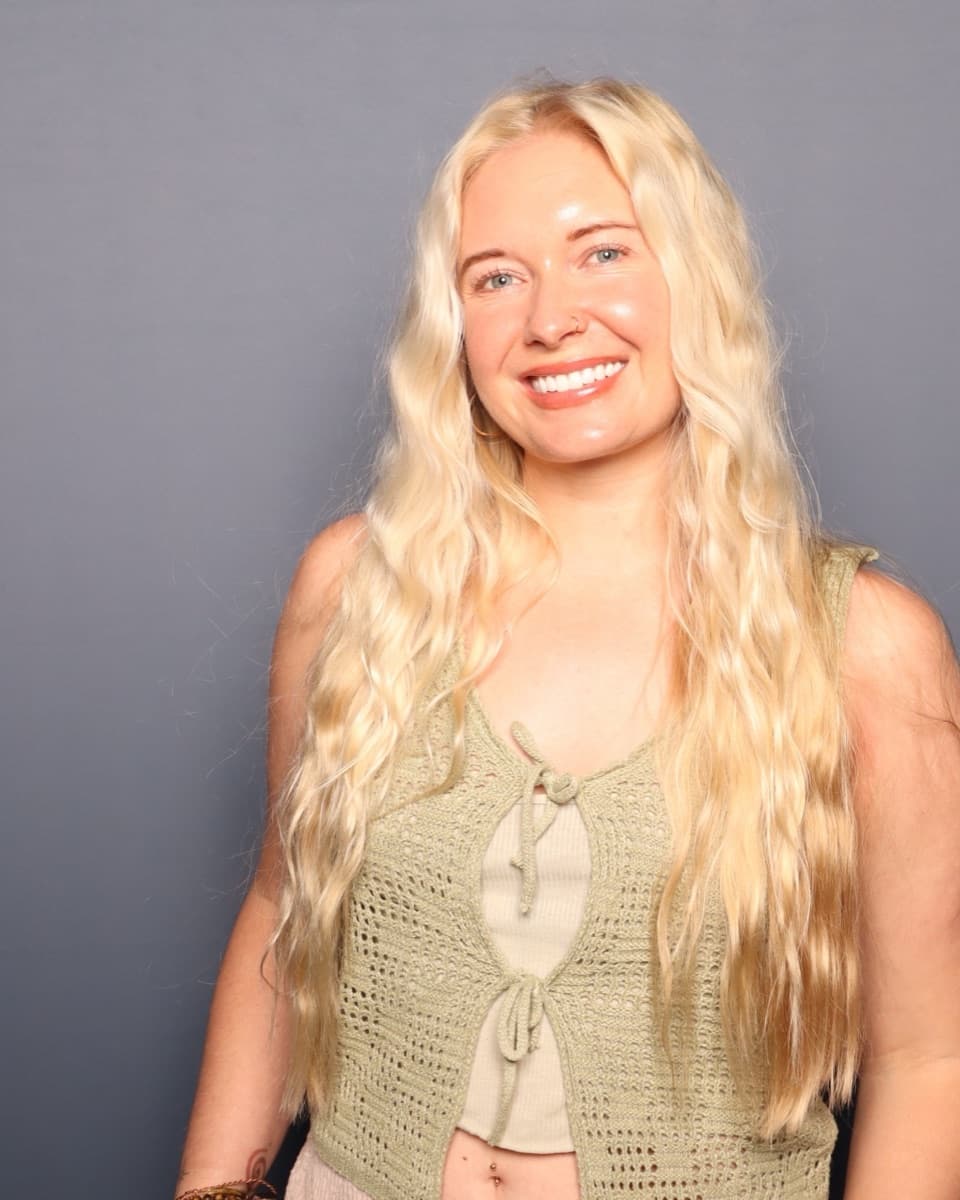
Educator, creative director, and co-founder
Based in Durango, Colorado
Your report is free, reviewed by us, and yours to keep.
— talk soon.
The reviews are already won, a 4.9 from ~510 real neighbors. The work ahead is cheap by comparison: online booking and an insurance-legible site that opens the front door. Those are the new patients an outspending corporate group can't buy with budget. Whenever you're ready, that's where we'd start.
Tom & Lu, Here Forward
An illustrative sample. Cedar Ridge Family Dental is a fictional business, written to show the format and depth of a here // forward AI visibility report. Any resemblance to a specific real company is coincidental.